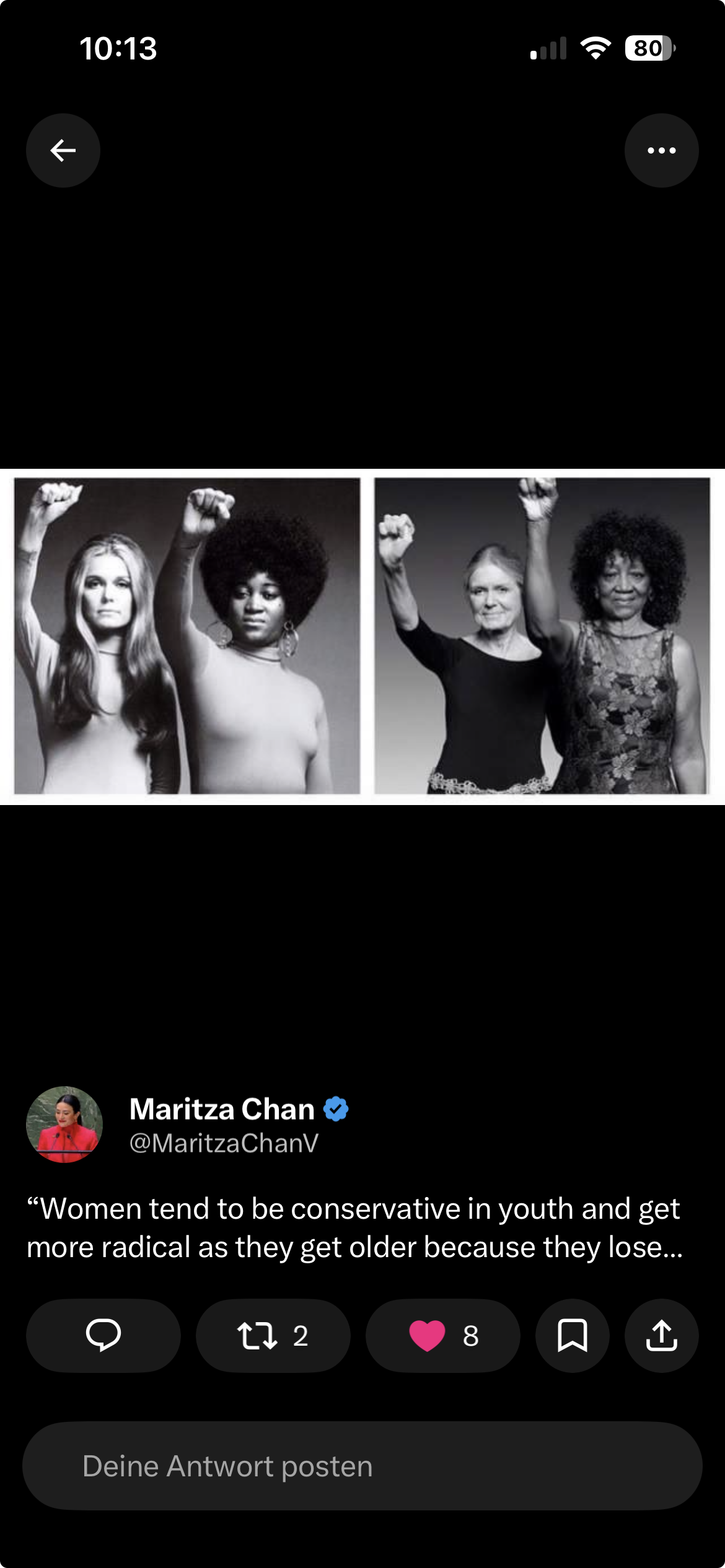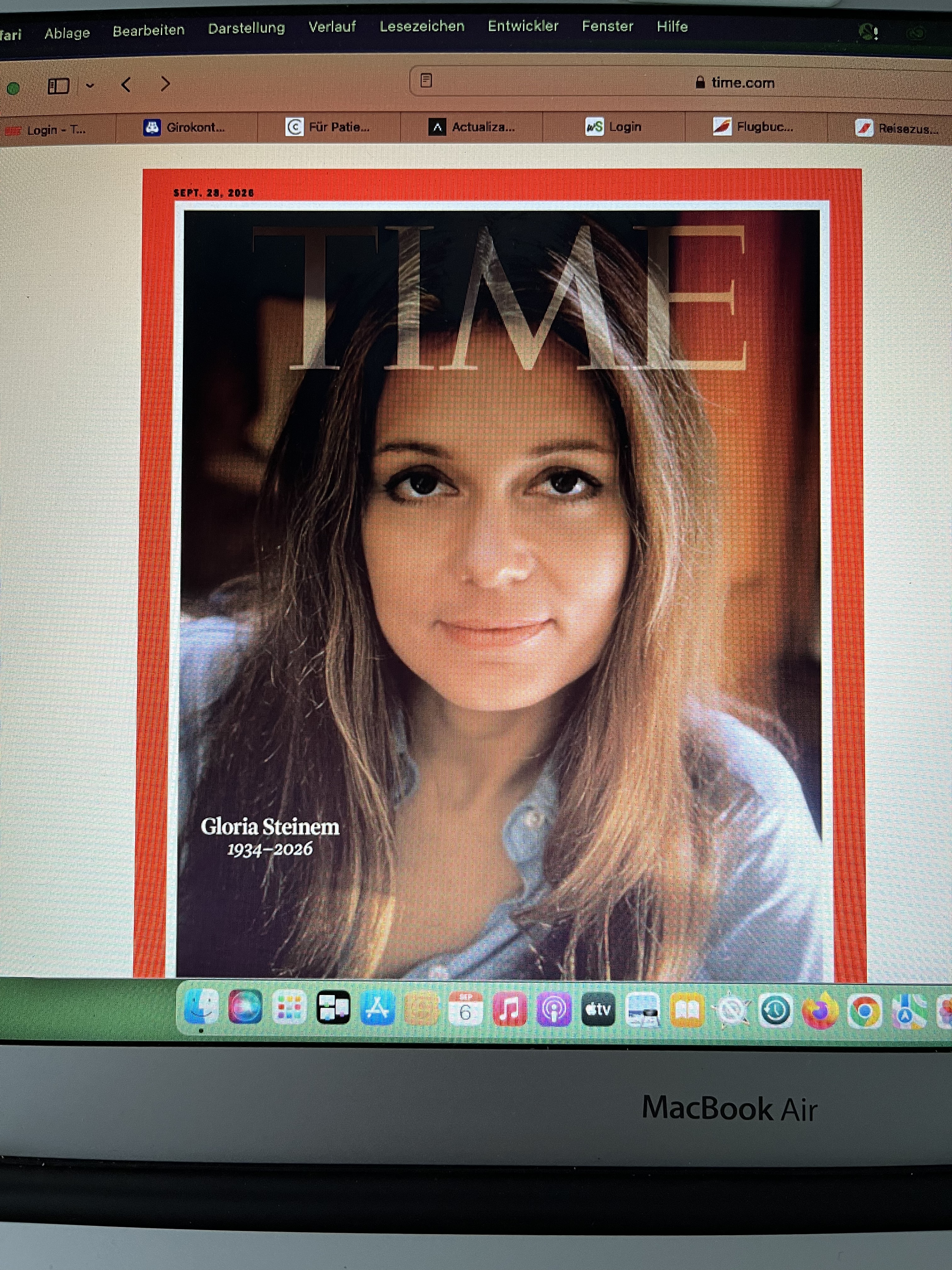
Writer, journalist and women´s rights activist Gloria Steinem died this week at the age of 92. She said a lot of smart things about women, men. power, equality and justice. Some years ago, I had come across an answer that she gave during a 2004 interview with Time magazine:
“Women tend to be conservative in youth and get more radical as they get older because they lose power with age. So if a young woman is not a feminist, I say “just wait”.”
https://time.com/archive/6738081/10-questions-for-gloria-steinem-2/
Bam! She struck such a chord with that statement. I think she is so right.
I would not have called myself a feminist in my youth or twenties. It was the 1980s and 90s, I was in school, later in university, I was working hard and I was excelling. I was achieving the goals I was setting for myself: getting that scholarship for a year abroad, doing my masters degree, training as a journalist at a prestigious media outlet, being hired at a cool, new daily paper as staff writer and editor in Germany. I was totally convinced that battles of the sexes were a thing of the past. I was the living proof that there was a level playing field, I thought.
That changed when I became a mother at the age of 32. With that choice – and it was an active choice that I would do again – my husband and I were faced with the question of how to manage care and pay work for our little family. I admit that our situation was special as I had moved from Hamburg to Mexico City, following my husband as he was starting his career; me being 30 weeks pregnant. Leaving my job behind. Today, I am sometimes wondering about the lack of critical thinking regarding that decision. I blame it on my youth (although I was not that young, really), the hormons and a somehow romantic idea about starting a family.
I am forgiving myself that I did not know then that becoming a mother is the most life changing experience. And: That actions have consequences. One of the consequences for my husband and me – being a binational couple, with not necessarily the language proficiency and qualifications to work in the other´s country – was that with that move we had set the foundation for him advancing in his career, while me taking on a much larger share of the care work; and basically developing laterally in my job, instead of moving up the ladder.
Our situation continued to be special as we decided to start an expat life with, in the end, another four moves, three of them transatlantic. Child 2 joined the family, me staying the primary caregiver, him being the breadwinner. After a while, I started working part-time. My husband´s hours were extremely unflexible. But that was a moment when I could have decided for myself that we needed outside help with the children and the home, so that also I could go back to work, for example full-time. We could have decided that, I should have demanded that. I did not. That derives from this romantic idea of a family – that the parents should raise their kids. But I did not realize that I would disadvantage my chances of returning into the job market with an appropriate position with that idea to do it alone.
In that time, I was not very advanced claiming women´s rights for myself, I am thinking today. I did not realize beforehand that being a parent is – besides maybe a calling – also an unpaid job, 24/7, that keeps you away from earning your own salary, developing in your career, and paying into your pension scheme. I wish someone had opened my and my husband’s eyes about that before we had taken that step. We might have had different discussions about it, or planned for it in a different way. I am still working on the level of policy analyst / project manager which is kind of the same as staff writer. And that more than 25 years after I first started with that kind of job. So, I have not gained economic and professional power in that time. Meaning, compared to others who maybe advanced, I have even lost power.
I lost even more power when my husband walked out on our marriage after more than 20 years. We had planned a life together, we had taken decisions together that had had different effects on him and me, and then from one day to the next this promise, this bond was broken. There was no common future anymore.
Economically, a wife has more power than a separated woman or divorcée. A couple does financially better than two separated parents. The person with higher earning power still does better than the one with less income. Security and protection through the other are the trade-offs for taking on family responsabilities. In a situation like a break-up, those things are something of the past. Substitutes have to be negotiated in the run up to a divorce, if you have not had a prenup which is very unusual in Germany (and Mexico). What also happens is, among or after the hurting, frustration, sadness and anger, it hits you – bam – and you turn more radical. You become a feminist, full blown, realizing that you have always been one at least partly in the decades before.