How to become a feminist
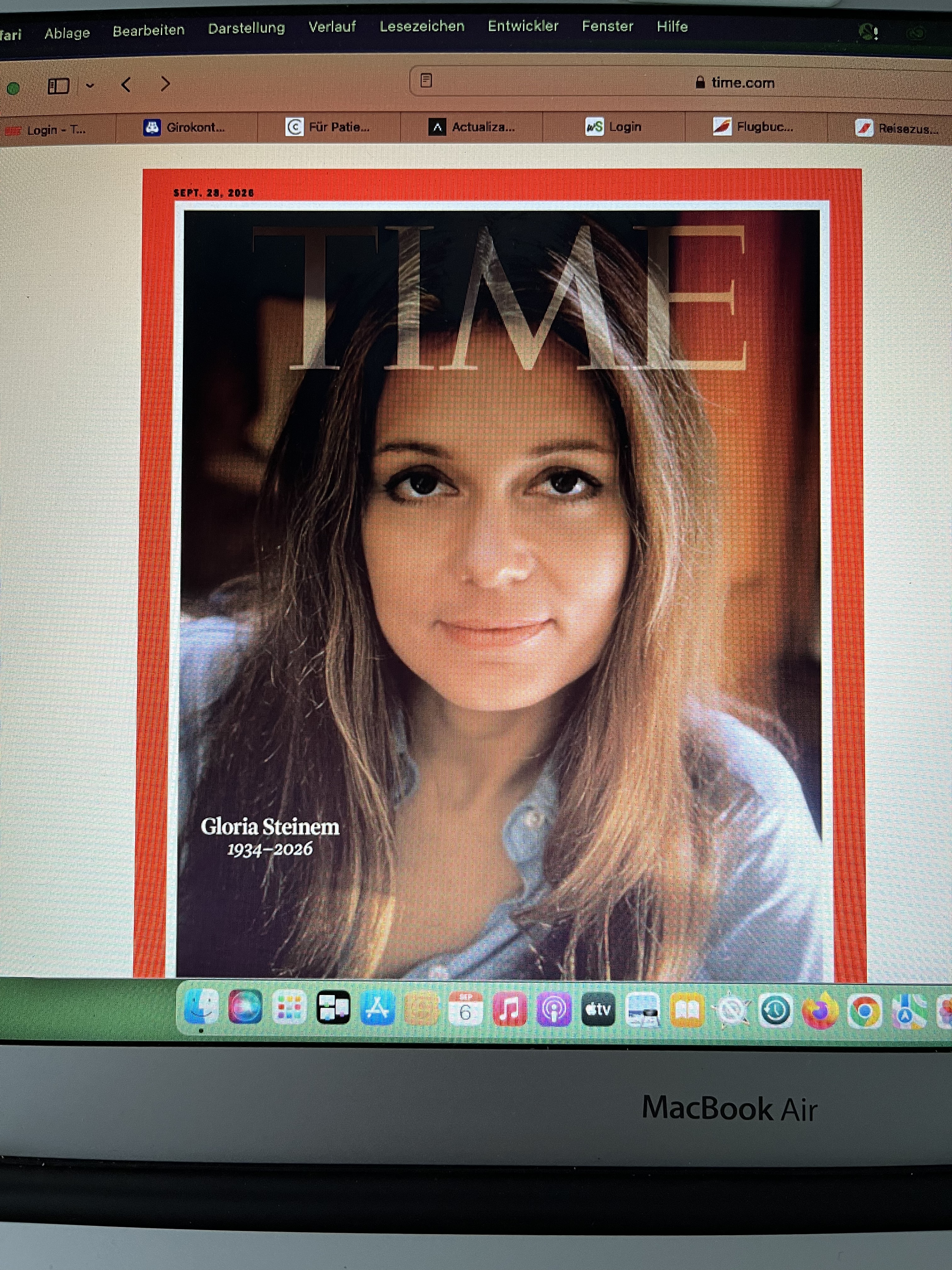
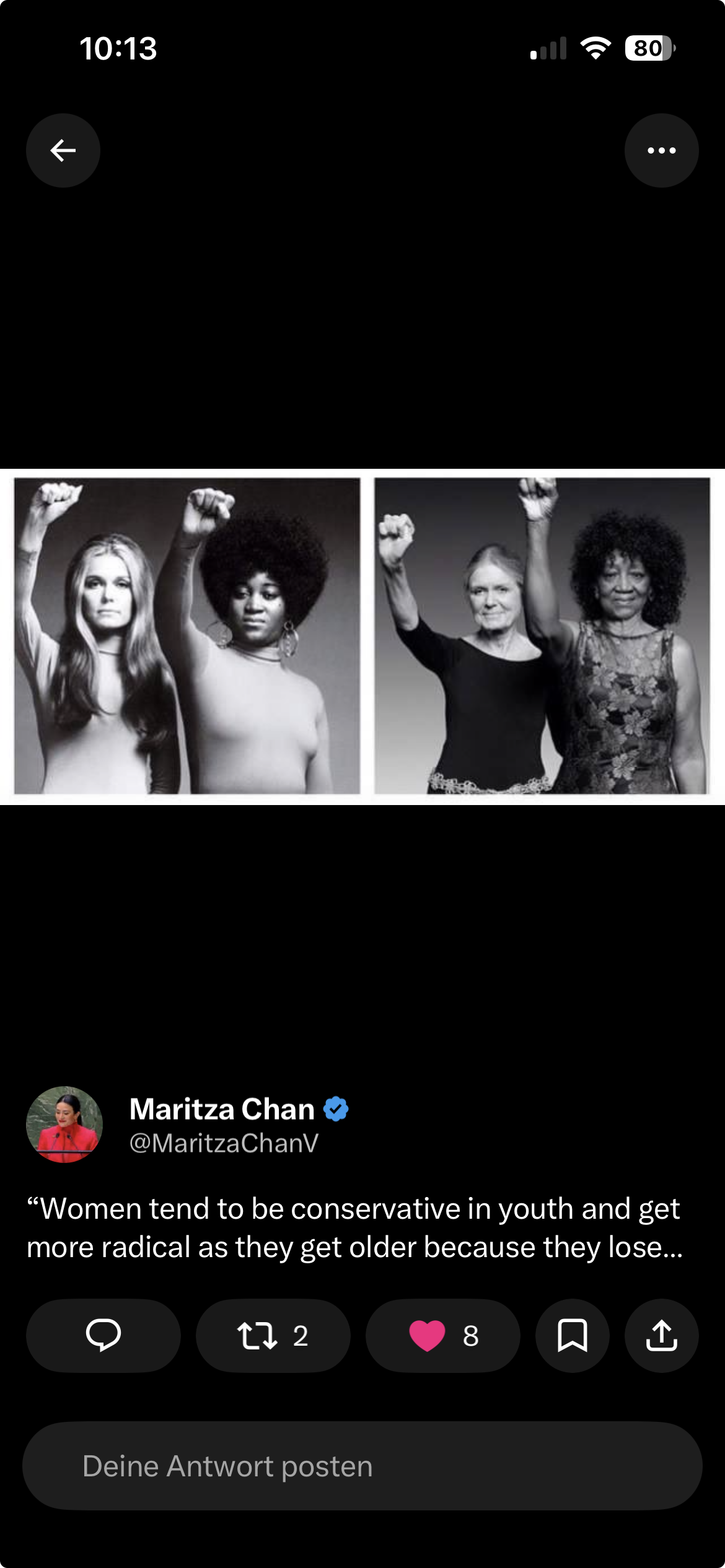
Writer, journalist and women´s rights activist Gloria Steinem died this week at the age of 92. She said a lot of smart things about women, men. power, equality and justice. Some years ago, I had come across an answer that she gave during a 2004 interview with Time magazine:

“Women tend to be conservative in youth and get more radical as they get older because they lose power with age. So if a young woman is not a feminist, I say “just wait”.”

https://time.com/archive/6738081/10-questions-for-gloria-steinem-2/

Bam! She struck such a chord with that statement. I think she is so right.

I would not have called myself a feminist in my youth or twenties. It was the 1980s and 90s, I was in school, later in university, I was working hard and I was excelling. I was achieving the goals I was setting for myself: getting that scholarship for a year abroad, doing my masters degree, training as a journalist at a prestigious media outlet, being hired at a cool, new daily paper as staff writer and editor in Germany. I was totally convinced that battles of the sexes were a thing of the past. I was the living proof that there was a level playing field, I thought.

That changed when I became a mother at the age of 32. With that choice – and it was an active choice that I would do again – my husband and I were faced with the question of how to manage care and pay work for our little family. I admit that our situation was special as I had moved from Hamburg to Mexico City, following my husband as he was starting his career; me being 30 weeks pregnant. Leaving my job behind. Today, I am sometimes wondering about the lack of critical thinking regarding that decision. I blame it on my youth (although I was not that young, really), the hormons and a somehow romantic idea about starting a family.

I am forgiving myself that I did not know then that becoming a mother is the most life changing experience. And: That actions have consequences. One of the consequences for my husband and me – being a binational couple, with not necessarily the language proficiency and qualifications to work in the other´s country – was that with that move we had set the foundation for him advancing in his career, while me taking on a much larger share of the care work; and basically developing laterally in my job, instead of moving up the ladder.

Our situation continued to be special as we decided to start an expat life with, in the end, another four moves, two of them transatlantic. Child 2 joined the family, me staying the primary caregiver, him being the breadwinner. After a while, I started working part-time. My husband´s hours were extremely unflexible. But that was a moment when I could have decided for myself that we needed outside help with the children and the home, so that also I could go back to work, for example full-time. We could have decided that, I should have demanded that. I did not. That derives from this romantic idea of a family – that the parents should raise their kids. But I did not realize that I would disadvantage my chances of returning into the job market with an appropriate position with that idea to do it alone.

In that time, I was not very advanced claiming women´s rights for myself, I am thinking today. I did not realize beforehand that being a parent is – besides maybe a calling – also an unpaid job, 24/7, that keeps you away from earning your own salary, developing in your career, and paying into your pension scheme. I wish someone had opened my and my husband’s eyes about that before we had taken that step. We might have had different discussions about it, or planned for it in a different way. I am still working on the level of policy analyst / project manager which is kind of the same as staff writer. And that more than 25 years after I first started with that kind of job. So, I have not gained economic and professional power in that time. Meaning, compared to others who maybe advanced, I have even lost power.

I lost even more power when my husband walked out on our marriage after more than 20 years. We had planned a life together, we had taken decisions together that had had different effects on him and me, and then from one day to the next this promise, this bond was broken. There was no common future anymore. 

Economically, a wife has more power than a separated woman or divorcée. A couple does financially better than two separated parents. The person with higher earning power still does better than the one with less income. Security and protection through the other are the trade-offs for taking on family responsabilities. In a situation like a break-up, those things are something of the past. Substitutes have to be negotiated in the run up to a divorce, if you have not had a prenup which is very unusual in Germany (and Mexico). What also happens is, among or after the hurting, frustration, sadness and anger, it hits you – bam – and you turn more radical. You become a feminist, full blown, realizing that you have always been one at least partly in the decades before.
La vida loca, aka “the crazy shit”

PostGlobe1

Again this summer, I realized what an un-normal, out of the ordinary life we are living.

My friend whom I helped a bit with her move, she just talked about “the crazy shit” after a while. We also called it “la vida loca”, but what she this summer and we last summer had to go through had nothing to do with the Ricky Martin song.

What I am talking about is a transatlantic move with a family of four. Ending the life you led at some place on this globe for several years, packing up everything, saying good-bye to friends. End of that story that was called “Berlin” (in her case) or “Mexico City” (in ours). She had lived in the German capital for 5.5 years, we in the Mexican for 5. Our kids spent very formative years of their lives in CDMX – our oldest from 11 to 16, our youngest from 8 to 13. No surprise, child #1 found it an extremely bad idea of parents to move at that stage in his life. He had made such good friends, he felt at home there, he wanted to continue with his life there. Period. Nothing else. For sure not start all over again, as he had done before – when he was 11 (and 7 and 2). He still remembered how it was the last time, and knows how it is, when you are the new one.

As a family, we have been living “la vida loca” for basically 18 years. My husband and I moved from Hamburg to Mexico City when he started his first job after finishing his PhD and I left mine, close to 8 months pregnant with our first child. We moved to The Hague, when child #1 was 2 years old; to Vienna, with child #2 on board, he then 4 years old. And back to Mexico in 2013. My oldest has a longer CV than some 50-year-old German who has lived in the same town all his life, done an apprenticeship and kept on working for that employer.

PostGlobe2

What comes on top for us and my friend, is that she and me, we are not married to Germans. But a person from a different country, even different continent, definitely different culture. Which makes the whole “expat experience” far more complicated. Because, “expat” jumps pretty short when compared to that situation. We have Latin American parents in law, a bank account in a developing country, and children in Mexican and Argentinian schools. When I left Germany at the end of 2001, I learned that privileges I would have enjoyed if I had stayed in Germany did not apply to me, as I was living abroad. For example, the time I stayed at home taking care of my first-born was not recognized by the German retirement system, as I did not “educate him in Germany or a EU country”. That he, someday, might live and work in Germany (which he can, among other things, as I always spoke German to him) and pay for retired people’s pension, is totally irrelevant in that respect.

Okay, as a picture is worth a thousand words, here come a few pages…

I have sold or gotten rid of about 3 cars, fridges, TV sets, and xboxes or play stations or whatever these things are called. And yes, we have sets for both – Mexican and German outlets – for our computers, etc. Yes, this is us:

PostEnchufes

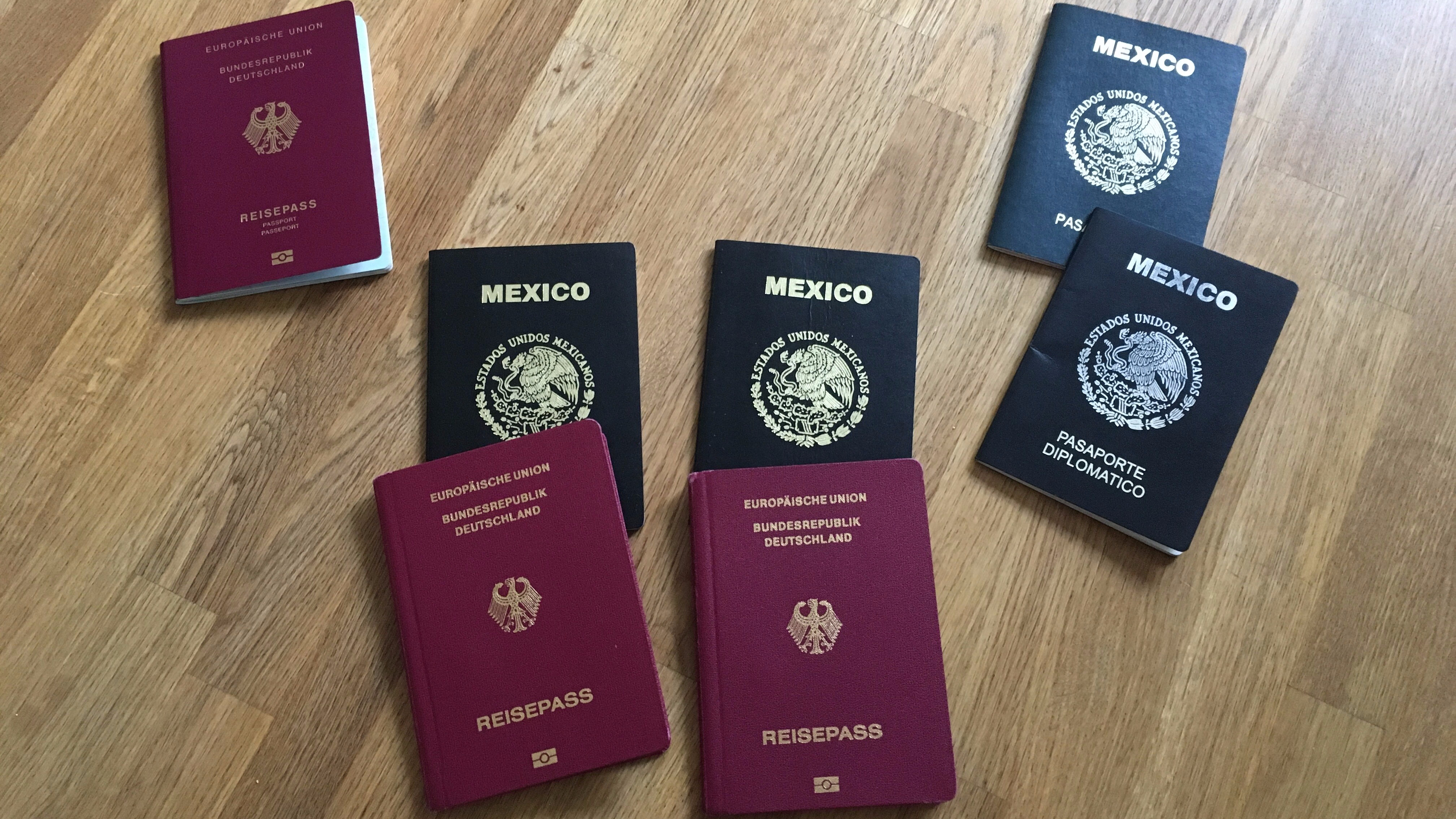
And yes, our kids have two passports, two birth certificates, their parents are experts in consular affairs and all the paper work one needs to do when applying for a German birth certificate in Mexico or a Mexican in The Netherlands. My husband and I got married in the UK, as back then, in 2000, we had to present far less documents than in Germany (try to get a “Ledigkeitsbescheinigung” or “Auszug aus dem Melderegister” in Mexico; great fun); and he was doing his PhD at the University of London. So, this is symbolic picture number 2:

PostPassports

And this is one of the most precious things I own. My set of mugs from Penguin Books which I bought when I did my masters at the University of Cambridge. And they moved with me, these mugs: in suitcases (from the UK to Cologne, from Hamburg to Mexico), in containers (from Mexico to The Hague; from Vienna to Mexico), in boxes (from one apartment to the other in Mexico, when we got hit by the 19S earthquake).

PostMugs

I leave you with two more photos.

PostBlombe1

This is the seal that the moving company put on a Hapag-Lloyd container in May 2004, the first time we moved with the Mexican Foreign Service. The last time we moved, last summer, we never saw a seal: the company was CRAP, cero a la izquierda, as they say in Mexico. The move took them more than eight weeks, instead of the usual four to five…

PostAABag

And yes, a psychologist once said that I am not a piece of “Diplomatengepäck”. Being the trailing spouse, and I am sure being the trailing child of an expat or a diplomat is not easy. Has its challenges. Can suck. Big time. I guess the expat’s or diplomat’s life as well, sometimes, but one assumes that he or she decided for that kind of life at some point. And might chose the exit option if he or she does not want to carry on with it.

But all in all, looking back at nearly 18 years of “la vida loca”, aka “the crazy shit” has been an enriching, interesting, inspiring experience that made all of us grow. I thank my “squad Lara” for this ride! (There is a reason why I did not write this post a year ago, when we just arrived in Berlin…the “conclusion” would have sounded a lot different.)


The big challenge

I grew up hardly thinking about feminism and gender equality. That debate took place before my time, it seemed.

During high school, girls could take the same courses as boys, and they got at least the same grades, often better. Then, as an apprentice and later at university, it was the same – loads of women attending the lectures on micro- and macroeconomics, a lot of them on top of their classes. They all got good jobs – it was the mid-1990s when we finished, the economy was doing fine all over Western Europe.

When I got my first well-paid position, the story continued – there were about as many women as men among the new recruits at Roland Berger, and also later at Financial Times Deutschland, there was pretty much a gender balance among editors and staff writers. Once you went up the hierarchy, women were scarcer, though.

So, all these years, I experienced that men and women have the same rights and that they can achieve the same if they want to.

This believe drastically changed when I got kids.

It might be a “German reality” much more than it is a Belgian, US-American or Argentine one. That is because until a few years ago (and still nowadays in a lot of cities in Western Germany), finding a day-care for your one-year-old is not easy. Finding one, that is open until 6 or 6:30 in the evening is close to impossible. And how about a creche for a six-month-old baby – forget about it. Germans are still doing quite well financially that the pressure for both parents to go back to work full time right after birth is less heavy than in Chicago or New York. And as Europeans usually run their own households, both husband and wife working AND doing the cleaning, washing, shopping and cooking is very often more than a lot of couples and new-born parents can deal with. In the developing world such as Latin America, professionals have the luxury of much more support at home – a “muchacha” who prepares your dinner, some guy who washes your car, a person with a power-drill and a bag of tools who fixes your broken sink for a few dollars, instead of you spending precious time on DIY during the weekend.

The special German character of this situation gets even more pronounced once children start school – as up until today, a lot of German primaries and even secondary schools finish at mid-day. And classes are usually designed so that students do a substantial part of the understanding and learning outside the classroom. In such a set-up, it comes in very handy for the student to have the support of a well-educated person in the afternoon – either in some after-school institution (those are, again, not always easy to find) or at home. In the latter case, another task for mom or dad.

When I consider all the men and women whom I studied and worked with in the past and who got children some time along the way, most of the men work full-time, while most of the women are employed part-time. The “moms” are occupied more than part-time, though – as in most cases they have assumed the main responsibilities of raising the kids and running the home.

So, on paper, men and women, fathers and mothers have the same rights and are considered equal. Reality shows, however, that even with the same education and similar capabilities, moms and dads very often take on different roles and subsequently have different careers and reach different earning potentials. One of the main challenges of nowadays families is for parents to find the roles that suit them and for couples to negotiate along mom’s and dad’s expectations, desires and necessities. After more than 30 years without them, I am finally leading my very own debates on feminism and gender equality.