Otto Dix en la Ciudad de México

ottodixautoretrato

En el fin de semana, nos fuimos a la exposición del pintor alemán Otto Dix en el Museo Nacional de Arte en la Ciudad de México. Es una de las actividades destacadas del Año Dual Alemania-México que empezó en junio 2016. Y con razón. Muestran más de 160 obras de este artista alemán quien pintó escenas de la Primera Guerra Mundial y de la vida urbana en Alemania en los años 20 del siglo pasado. Los nazis declararon su arte “degenerado” (en alemán se dice “entartete Kunst”), y despidieron a Dix de su puesto de profesor de arte en Dresde. Dix huyó al lago de Constanza, a un pueblo, con su esposa y sus tres hijos, y esta casi forzado de cambiar el foco de su trabajo a la naturaleza. Después de la caída de los nazis retoma algunos de los temas criticas de antes – la guerra y la violencia, la muerte, la vida, pero también el amor, su familia. Muere en 1969, con 77 años, cerca de su casa en el sur de Alemania.

Que a mi me fascinó lo mas es un comentario que hizo la curadora de la exposición, Ulrike Lorenz, sobre Dix: A pesar de todas las cosas que vio en su vida – el horror de la guerra, la crisis económica, desempleo, el fascismo, la Segunda Guerra Mundial -, el no vio la vida como mala. Para Dix estas experiencias eran parte de la vida, y decidió que la vida era buena. Casi la ultima obra en la exposición muestra el artista con su nieta, sonriendo. Antes, siempre se ha pintado mucho mas serio, como en el autorretrato de arriba.

La exposición se puede ver hasta el 15 de enero de 2017 en el MUNAL en la CDMX. Antes ya la exponían por tres meses en Monterrey, en el Marco. Yo la recomiendo muchísimo!

Hoy No Circula.

Mexico City is living a serious environmental crisis. It has been living a serious environmental crisis for years, but some wrong political decisions and “unfavorable” climatic conditions have turned it into a crisis that no one can pretend anymore is not happening.

In mid-March, this city of 8 million inhabitants and supposedly 5 million cars driving on its streets each day, had its first environmental alert in 14 years. Ozone levels went up to 200 parts on the local Imeca scale – a situation when people are recommended to abstain from any physical exercise outside, to stay inside, and close all windows, etc. Kids did not have sports lessons in school during that week (hardly any school here has a gymnasium), and football or baseball games were cancelled.

Because of that experience and of air quality predictions for the upcoming weeks and months of typical Mexico City spring weather – intense sunshine, high temperatures and no rain at all – the Environmental Commission of the Megalopolis, short CAMe, decided last week that from today onwards, 20 percent of the whole car park of this huge metropolitan area should stay off the streets. Each weekday, a different kind of license plate end number cannot circulate; or a different color of license plate sticker (they have five colors here: yellow, pink, red, green and blue). It is a new-old variant of the “Hoy No Circula”-program that goes back to the late 1980s when air pollution in Mexico City was even much worse.

Today again, authorities had to declare environmental alert; again, ozone levels rose to a bit above 150 parts, the threshold that triggers the alert, phase I. So what does CAMe decide? They double the number of cars that cannot circulate tomorrow, grounding then altogether 40 percent of registered private vehicles.

40 percent of cars not circulating – that means, that the people who usually use these 2 million cars to drive to work, to bring their kids to school, or buy food at the supermarket have to use alternative means. There is public transport in Mexico City – which already positively distinguishes it from some other North American cities – but at rush hour, people squeeze like sardines in a can in metro trains and metro busses, and the tens of thousands of mini-busses, the “peseros”, are jam-packed. The system has not held up with the crazy growth of this huge metropolitan area that houses 28 million people. And being able to afford one’s own car, to drive a car, is still something of status thing here; lots of upper-middle class people would not use the metro, as they consider it for “poor people”.

There have been a lot of wrong political decisions in the past; mainly the decisions that have not been taken. Such as the severely delayed approval of a heavy-transport regulation: Norm44 would cut particle pollution responsible for black carbon by 98 percent. One sees these trucks all the time – huge engines, the length of three or four cars, and thick, black exhaust coming out when they start and accelerate. The same applies to city garbage trucks, and thousands of mini-busses. Residents here argue, rightly so, that those vehicles should be as strictly regulated as private cars. Politicians shy away from it as they fear the economic repercussions.

What is most striking to me, personally, is that I am experiencing here what a lot of developing country cities are experiencing today or will experience tomorrow. Air quality in Mexico City is actually not as bad, if you compare it to Delhi, Karachi or Dakar. But it is bad enough for my kids not being able to play sports outside, or me going for a run in the park. I live in this mega-urban place – lots of concrete, lots of asphalt, hardly any green areas left – with more and more cars each year, and the air I am breathing in and out is actually damaging to my health. This is what development looks like – first there are the cars, the streets, the factories, supermarkets and shopping centers, and then we think about the environment. It was like this in Europe 200 years ago, and it is like this in Mexico, South Africa and China now. The problem is just that, at least in Mexico City, we are far too many people. And this density of people relates in a whole range of environmental problems.

Hopefully, this current crisis makes people here to change their life styles to a more sustainable manner, and politicians to take better decisions.

In search for a better future and lasting peace

What I am slowly realizing, a bit more than two years after having moved to Mexico, is that the place I come from is much more abnormal, globally speaking, than the place I am currently living in.

I am German, I have been born and raised in Germany, and until I was 24, I have nearly exclusively lived in Germany, besides a year as an AFS exchange student in Japan. Then I went to the US and the UK to study and work. It was not until 2002, that I started living, for the first time, in a developing country – in Mexico.

Europe – or should I better say Western Europe – has always been my point of reference. I see the negative aspects of daily life in Mexico – impunity, corruption, underperforming government, traffic, contamination, the non-existent service mentality when it comes to monopolies or oligopolies such as Telmex, Telcel, banks, the state electricity company, internet service providers, you name it – and I compare them to how life in Western Europe is. And I see two very different realities.

But, globally speaking, actually billions more people live in conditions similar to the ones in Mexico, or far worse, than to the super high standards of Germany, The Netherlands, Austria, or the likes – legal certainty and transparency, in general good governance, excellent public services such as education, health, transportation, etc. Western Europe is actually a tiny island in the huge sea of countries struggling for a better life. With hundreds of thousands of refugees and migrants coming into Western Europe, people there get a glimpse of life beyond their borders – a world, a lot of Germans, Dutch and Austrians have been busy for years, if not decades, to forget and not be bothered with too much.

The current crisis should remind Europe why it is so important to take on global responsibility. Every human being has the right to try to achieve a better future for themselves and for their children – if this right is denied for too long in their country of origin, some will take the chance and search for it somewhere else. Migration might not be a human right, but it for sure is a reality. Mexicans search for better lives mainly in the US – about 12 million of them live there, that is more than 10 percent of their total population. They risk their lives trying to make their way across the desert. Africans, Central Asians and people from the Middle East might opt for Europe, basically because it is closer. They risk their lives, and lots of them loose it, trying to make their way across the Mediterranean.

After having lived for some time outside my Western European comfort zone, I can understand why some Mexicans, Nigerians, Pakistani or Afghans get on the migration trail.

The case of Syrians is even much more dire. They flee from war in their country – something most of us, fortunately, have never faced and never wish to face. I cannot imagine how frightened and vulnerable you must feel in a place like Syria right now. And I can empathize with any Syrian, particularly fathers and mothers, leaving their home, starting a journey to someplace safe.

I do not have a plan for peace in Syria, unfortunately. But it is imperative that the international community takes responsibility to protect the people of Syria. How come that humans can fly to the moon, split atoms, and cure cancer, but have come across so many situations of  war that we have not satisfyingly ended. We should put our smartest minds to trying to address these conflicts and bring more and lasting peace to the people. 25 years after the fall of the Iron Curtain, we have to invest in finding solutions to the new threats we face.

Contra la mega-urbanisación de la colonia Del Valle

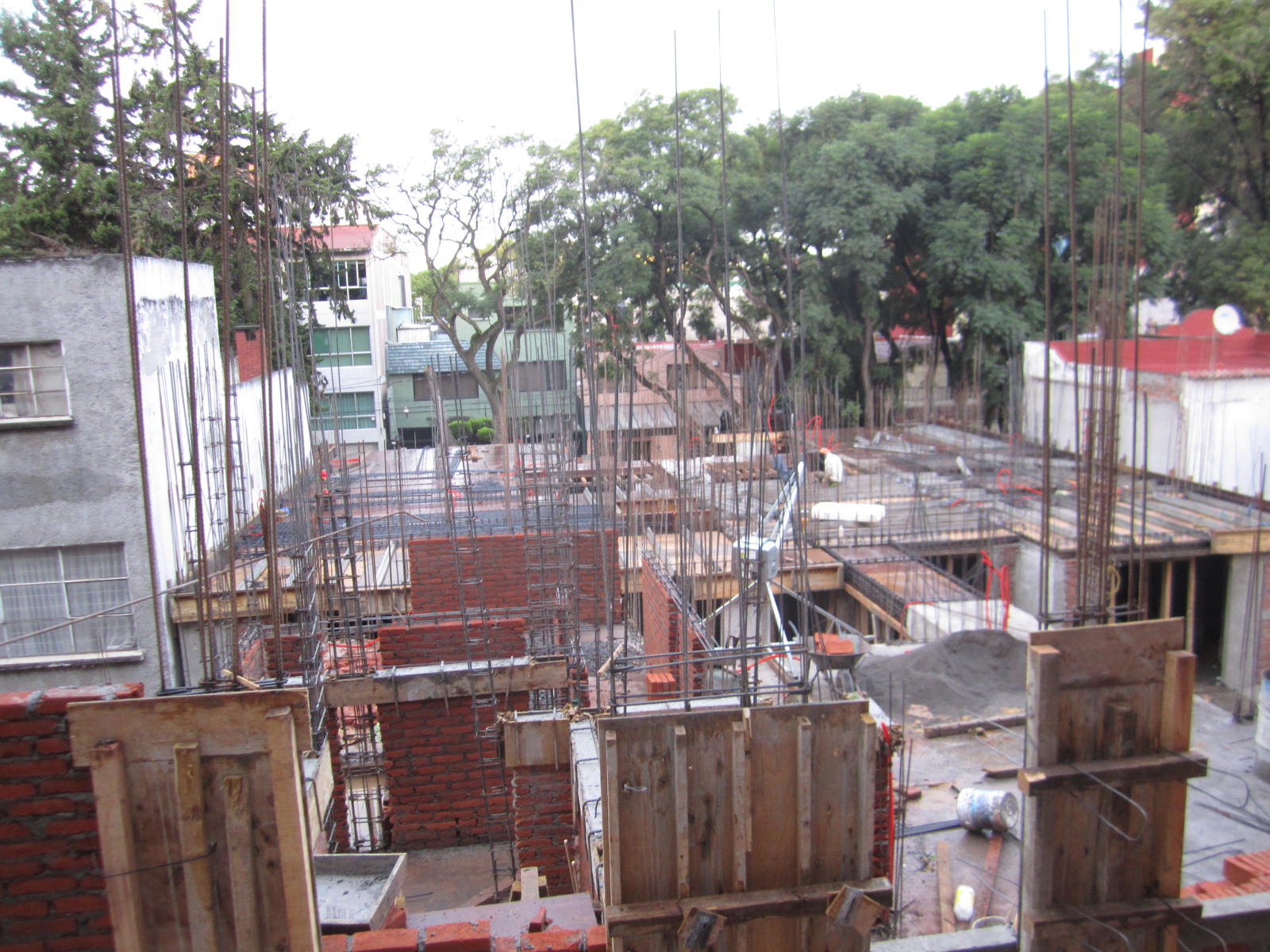
Un foto puede decir mucho mas que 1000 palabras. Yo tengo dos fotos que les quiero compartir. Es la vista de mi sala.

IMG_1610

IMG_2263

El primer foto es de hace mas o menos un año. El segundo es de hoy. Los dos no tienen exactamente el mismo ángulo. Tampoco son de gran calidad fotográfica, francamente. Pero donde hace un año estaba una casa individual con un jardín grande, hoy en día hay una construcción que llena hasta el ultimo centímetro cuadrado del terreno.

La Cuidad de México, o mas propiamente el Distrito Federal, tiene casi 9 millones de habitantes. Es una ciudad muy densamente poblada, en muchas de sus zonas. Yo vivo en una zona céntrica, se llama la colonia Del Valle, en la delegación Benito Juárez. Hasta los fines de la década de los 1970s, era una colonia con muchas casa grandes, con jardines – como la que estaba atrás de mi edificio hasta hace un año. Era una colonia con calles con camellón en medio, con arboles, muy tranquila y residencial, de hecho. Desde los años 1980s, empezó una transformación de construir mas edificios con departamentos y también oficinas. Pero hoy en día ha llegado a un punto que ya no es nada sustentable, y tampoco agradable para los habitantes.

Es totalmente lógico que la capital política, económica y cultural de un país como México que tiene una población que todavía crece año por año, también crece. La megalópolis alrededor de la Ciudad de México tiene ya como 28 millones de habitantes; el país llega casi a 120 millones. Y también en México, como en todos los países desarrollados, la gran mayoridad de la población vive en centros urbanos. Entonces construcciones de nuevas viviendas son totalmente necesarias – no hay de otra.

Pero en la colonia Del Valle, por casi cada casa vieja que se vende, desarrolladores construyen un edificio con seis, ocho, diez departamentos o más. Y usan su terreno al máximo – que es totalmente legal; nada mas tienes que dejar menos que un medio metro alrededor de tu edificio por razones sísmicos. Ese resulta, lógicamente, en mucho menos áreas verdes, mas gentes, mas tráfico, y mas demanda a la infraestructura publica que abastece per ejemplo agua y electricidad y que se encarga de la basura. Si sigue ese desarrollo, en pocos años la Del Valle va tener nada mas edificios, asfalto y coches. Y unos pocos arboles adentro de unos pocos parques públicos.

Como habitante de la Del Valle, me gustaría que mi gobierno local a lo menos trata que la colonia no se convierte en un mini-Manhattan. No estoy hablando de parar la construcción de edificios – pero a lo menos introduce algunas reglas que se debe conservar áreas verdes, que se llena un terreno 98% con ladrillo y cemento. Hasta ahora, no veo mucho de los representantes oficiales aquí contra la mega-urbanisación de mi colonia.

Viva Hidalgo! Viva México!

Today, Mexico celebrates the 205th anniversary of its independence. In the early hours of 16 September 1810, the Mexican Catholic priest Miguel Hidalgo encouraged a group of people to free themselves from Spanish colonial rule. Hidalgo, the most important of Mexico`s independence heroes, had the church bells ring and supposedly shouted “Death to bad government!” that night, in the town of Dolores in the state of Guanajuato. In the subsequent months, Hidalgo gathered an army of 90,000 mainly poor farm workers from indigenous or mestizo origin who fought against the ruling elite in the country – Spaniards and “criollos”, descendants from Spaniards born in the colonies.

Hidalgo was captured and executed not even a year after his famous “grito”, i.e. shout. The Mexican War of Independence lasted another ten years, until the country finally achieved its sovereignty in 1821. The question is, if it has also overcome bad government.

Mexico is a great country. It covers nearly 2 million square kilometers, more than five times the area of Germany, of beautiful coastlines, tropical forests, pristine mountain ranges, fertile plains and deserts with a unique biological, cultural and ethnic diversity. It brought corn, tomatoes and cocoa to the world; to name just a few of the goods. Its 120 million people are friendly and hard-working. Its economy ranks 15th on the global scale – thanks to the growing manufacturing industry, the sluggish oil and gas sector, tourism and the remittances of more than 12 million Mexicans living in the United States.

But nearly 200 years after Mexicans could again fully decide for themselves and choose a government they deemed appropriate, the country could be and should be in better shape. In 2014, 55 million Mexicans lived in poverty – that are even two million more than two years earlier. 28 million did not have enough to eat, 22 million suffered from a serious deprivation in basic education, the same number did not have proper access to health care. The ones that are doing better work overtime and spend every peso they can to send their children to private schools and attend private doctors – despite the fact that the government provides both for free. But a lot of people are just not content with the quality of public services.

Insecurity in the country is a definite issue. Impunity is widespread – according to the Financial Times, only 0.5 percent of crimes went punished in 2013. The papers conclusion after the disappearance of 43 students in Iguala last September: “It is remarkable Mexican criminality is not higher still.” And Mexico ranked even worse than in previous years in 2014 in Transparency International’s Corruption Perceptions Index – it came out as 103rd on a list of 175 countries.

Seven in ten Mexicans say that they are dissatisfied with the way things are going in their country, according to a latest poll by the Pew Research Center: Rising prices, crime, lack of employment opportunities and corrupt political leaders were the top concerns.

The Mexican President, state governors and city mayors honor Hidalgo’s contribution to the country by shouting out his name and the ones of several other independence heroes on the night of 15 September. President Enrique Peña Nieto did that yesterday at 11 pm from the balcony of the Presidential Palace in Mexico City. He has three years left of his six-year term – he, and any other elected official in the country, should use that time to continue the fight Hidalgo started and make bad government truly a feature of the past. The Mexican people deserve it.

Playing hardball and crossing a line!

Yesterday (Tuesday) morning, a recording of a private telephone call between the President of Mexico’s National Electoral Institute (INE) and the organization’s executive secretary was leaked to the public. In the call which took place in April, INE head Lorenzo Córdova tells his colleague about a meeting he had with indigenous leaders and mocks the way one of them was speaking.

Definitely, what Córdova said in the phone call, was offensive and – if you want to use that concept – not politically correct. INE’s function is to make sure that parties in Mexico act according to the rules and that elections are organized in a free, fair and effective way. There are elections coming up in less than three weeks, on 7 June. Córdova very often seems like a mum telling her fighting children to stop and behave – campaigning can be a messy business in Mexico. I still have not found out which institution fulfills the role of INE in my country, Germany. I actually think, there is no one counterpart, but that responsibilities are held by different bodies, if at all. Maybe politicians also just stick to the rules more there. In México, compliance with and enforcement of the law are some of the biggest problems.

We all know that we live in a world where government institutions such as the secret service survey phone calls, messages, emails, etc. By doing so, they infringe on basic human rights, for example our right to privacy. That is not okay, and in a lot of parts of the world there are debates going on as to how far surveillance should go. Usually the argument of those using these techniques is that they are necessary for protecting national security. I do not think that the head of Mexico`s national electoral body should fall under this category.

We also know that there are, let’s call them “free agents”, who know how to infringe on people’s privacy. Making a private phone call public, however, is even a step further. INE yesterday filed a formal penal complaint, so it will be up to the attorney general’s office to find out who did the recording and who leaked it. Taken Córdova’s position, it seems the most likely that some party official has decided to play hardball. What he or she might not have considered is that with choosing the action he or she did, a line was crossed!

Mexico’s democracy is already plagued by corruption, cronyism and elected officials’ indifference to the people they represent. It is under severe threat from organized crime. Now another unlawful instrument has made its way into the toolbox of some acting in the political arena. I hope that investigators find the culprit – because he or she has not only damaged Mr. Córdova or the INE, but the whole country.

More on the story can be found here:

Graban burla de Lorenzo Córdova sobre indígena; INE denunciará intervención telefónica

Mexico’s “Green” Party

Parties that call themselves green usually define as one of their main goals to protect the environment. Using earth’ resouces in an efficient and respectful way, trying to adapt one’s consumption patterns in order to mitigate the dangerous developments of global warming and climate change – all those are usually policies pushed for by green parties.

It is particularly important for politicians that their words are followed by appropriate actions – a President claiming to fight corruption should not receive favors by a big government contractor; a governor claiming to protect human rights should not ignore when police in his state uses violence and torture.

Yesterday, on a highway outside Mexico City, I came across this car.

Yesterday at a highway outside Mexico City.

A Chevrolet Suburban, black, darkened windows, quite popular in Mexico, actually. Depending on the model, the Suburban has at least a 5.3-liter engine and 320 horsepower and a fuel economy of, in the best case, 15 miles per gallon in the city and 21 miles per gallon on the highway (for my European friends: that is roughly 15 liters on 100 km in the city and 10 on the highway).

The car displayed huge stickers with the slogan “Partido Verde – Sí cumple“, meaning that the Green Party fulfills the promises they make. I was wondering what the political promises and goals of Mexico’s Partido Verde were when I got overtaken by that car. I think, the party has some catching up to do on their own environmental consciousness.

Ecobici – trying to make a megacity more liveable

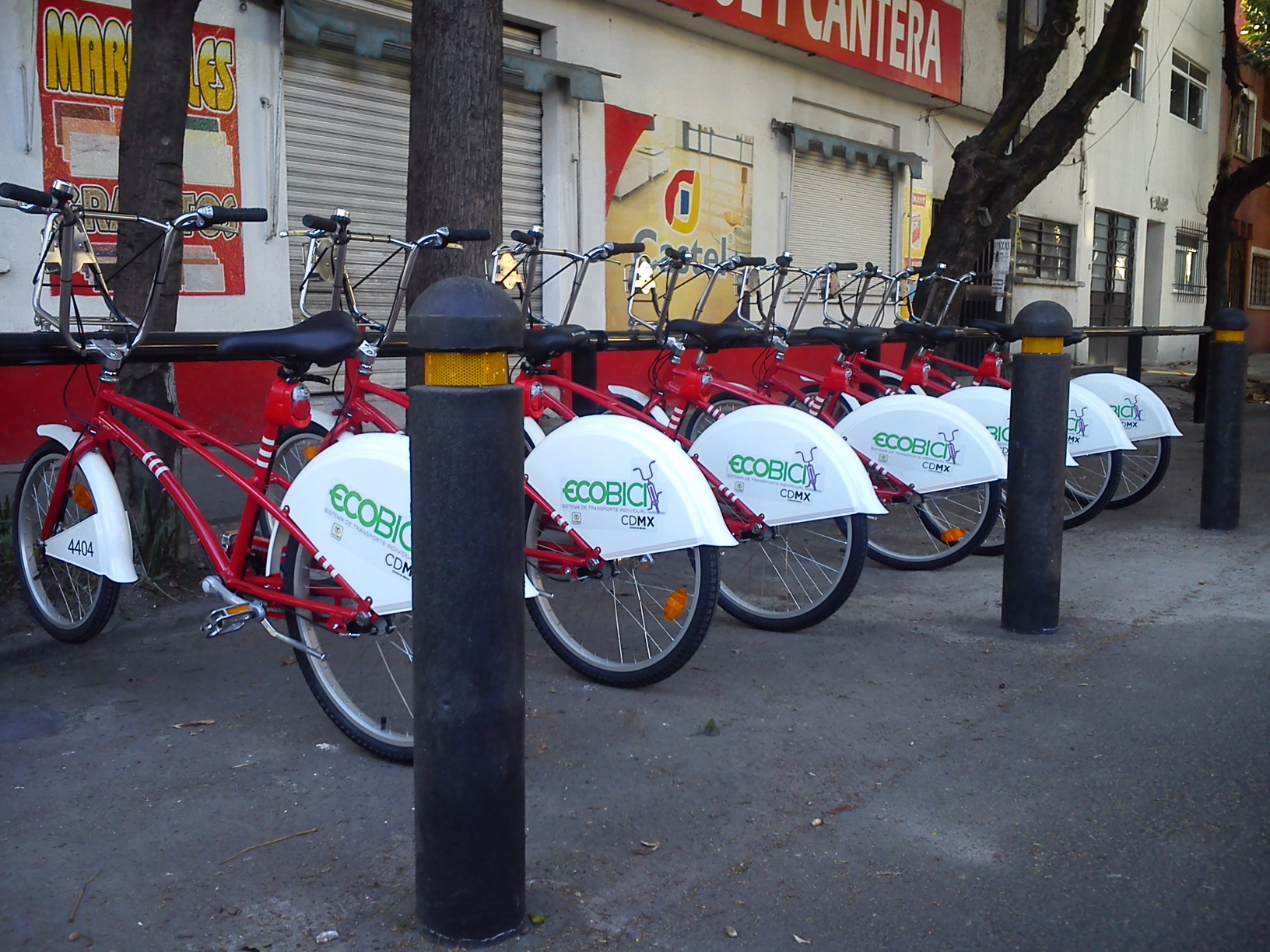
For the last five years, little red bicycles have helped to make the heavy Mexico City traffic a little less dense and polluting. The service – run by Mexico City’s local government – now offers more than 6000 bikes at more than 400 bike stations. An annual membership costs 400 pesos (27 USD or 24 Euros); lately, short-term memberships for one, three or seven days have been introduced. According to Ecobici, nearly 150.000 users have registered so far for the service which is the biggest in Latin America.

And right on their 5th anniversary, the Ecobicis have made their way into our neighborhood, the borough of Benito Juárez.

The only thing lacking now is educating local drivers that they are not the only ones on the streets. Might be an even tougher job than what Ecobici has reached so far.

DSC_0429

Vivos los queremos!

I have not commented so far on what happened in Iguala in the Mexican state of Guerrero nearly eight weeks ago.

But today, as Mexico celebrates the 104th anniversary of its revolution, people all across the country and Mexicans abroad honor the 43 kidnapped students of Ayotzinapa by wearing black. By showing their solidarity with the students, with their families, with their friends.

Everybody has the right to lead a life in peace, in a secure and safe environment, in a society based on laws and that respects the law, and with justice being done.

Impunity is unacceptable!

Moving countries – part II

The last few weeks, I have been partly irritated, annoyed, frustrated. What happened?

After we have been living here for nearly twelve months, after the first school year finished and we have had our first summer vacactions, I decided that now it was time for myself. I had gotten my kids into the school we always wanted (and which had first told us that they could not offer them a place as classes were full). I had assisted them in countless homework sessions, struggling with the Spanish language that they had heard and partly used since they were born with their father and their Mexican grand-parents, but that they had never been formally taught in. I had found us an apartment. I had waited – also it seems – countless times for some handyman to not show up on time or not show up at all to fix something in our flat – informality is widespread in Mexico, and in the capital there is always “trafico” that serves as a good excuse. I had found us a maid, a pediatrician, a dentist; struggled with the lack of service from banks, insurance firms, the gas company.

So, after all that, I though that I would like to find a job; find a company or an organization that could make use of my professional experience, that would give me opportunities to add value, to grow, and hopefully appreciate my services by paying me a decent salary. And that is when irritation, annoyance and frustration started. And when I got aware of my blatant ignorance of Mexican labor market conditions.

I knew that the minimum wage was very low – it actually is 66 pesos, or a little bit more than 5 US Dollars, a day. As most laborers work six days a week, but get paid for seven, that would make close to 2000 pesos a month. Having a masters degree, I was considering my earning potential far above minimum wage. But still, what I have been offered so far is considerably below my NGO salary back in Vienna. And that was less than what I had earned working in knowledge management in The Netherlands. And that, again, was not as good as what I had gotten as a business journalist in Germany. You see – my career, when you measure it by income, has been in a downward spiral for the last 13 years. I have been doing something wrong (but that would be the subject of at least one other post, I guess).

But back to my job hunt in Mexico. I also knew that Germans are very spoiled when it comes to vacation days. I had 30 days when I worked at Financial Times Deutschland. Times have changed a bit in Germany as well, particularly if you enter the labor market, but still, Germans enjoy a great amount of vacation a year. In one of my first interviews, I learned that according to Mexican labor law the employee actually does not have the right to ANY day of paid vacation during the first year. In year two, law grants her or him six days. After ten years, you have the right to ten paid days a year. There are several employers that offer more than the legal minimum. However, for a European even 15 days a year is meager, and it does not even cover a third of Mexican school vacation. So, if you try to combine family and career, start saving up for summer camps.

In addition, Mexicans work the most and the longest hours – at least within the club of industrialized countries (OECD). A Mexican worker puts in more than 2200 hours a year; a German not even 1400; an American close to 1800.

So, bad pay, little vacation, and long hours. On top of all that, trying to commute in a metropolitan area of 20 million people can be stressful and can take an hour or more, each way. That is not exactly the jackpot. With that in mind, when I feel irritated, annoyed and frustrated, I am trying to cut myself some slack. And then I remind myself of the theme of this blog that says “keep on trying” – and I write another application.

What adds to my irritation is that I would rather like to find something, but without the searching part. Yes, I admit, I confess. After having moved countries four times in 13 years, searching for a suitable position has felt taking as much time as actually working in the different jobs. But, as the Mexicans say: ni modo. What happens to me now is just another phase of adaptation to a my new place of residence. I should congratulate myself that I have managed part I so well. Keeping on trying.