Vivos los queremos!

I have not commented so far on what happened in Iguala in the Mexican state of Guerrero nearly eight weeks ago.

But today, as Mexico celebrates the 104th anniversary of its revolution, people all across the country and Mexicans abroad honor the 43 kidnapped students of Ayotzinapa by wearing black. By showing their solidarity with the students, with their families, with their friends.

Everybody has the right to lead a life in peace, in a secure and safe environment, in a society based on laws and that respects the law, and with justice being done.

Impunity is unacceptable!

Moving countries – part II

The last few weeks, I have been partly irritated, annoyed, frustrated. What happened?

After we have been living here for nearly twelve months, after the first school year finished and we have had our first summer vacactions, I decided that now it was time for myself. I had gotten my kids into the school we always wanted (and which had first told us that they could not offer them a place as classes were full). I had assisted them in countless homework sessions, struggling with the Spanish language that they had heard and partly used since they were born with their father and their Mexican grand-parents, but that they had never been formally taught in. I had found us an apartment. I had waited – also it seems – countless times for some handyman to not show up on time or not show up at all to fix something in our flat – informality is widespread in Mexico, and in the capital there is always “trafico” that serves as a good excuse. I had found us a maid, a pediatrician, a dentist; struggled with the lack of service from banks, insurance firms, the gas company.

So, after all that, I though that I would like to find a job; find a company or an organization that could make use of my professional experience, that would give me opportunities to add value, to grow, and hopefully appreciate my services by paying me a decent salary. And that is when irritation, annoyance and frustration started. And when I got aware of my blatant ignorance of Mexican labor market conditions.

I knew that the minimum wage was very low – it actually is 66 pesos, or a little bit more than 5 US Dollars, a day. As most laborers work six days a week, but get paid for seven, that would make close to 2000 pesos a month. Having a masters degree, I was considering my earning potential far above minimum wage. But still, what I have been offered so far is considerably below my NGO salary back in Vienna. And that was less than what I had earned working in knowledge management in The Netherlands. And that, again, was not as good as what I had gotten as a business journalist in Germany. You see – my career, when you measure it by income, has been in a downward spiral for the last 13 years. I have been doing something wrong (but that would be the subject of at least one other post, I guess).

But back to my job hunt in Mexico. I also knew that Germans are very spoiled when it comes to vacation days. I had 30 days when I worked at Financial Times Deutschland. Times have changed a bit in Germany as well, particularly if you enter the labor market, but still, Germans enjoy a great amount of vacation a year. In one of my first interviews, I learned that according to Mexican labor law the employee actually does not have the right to ANY day of paid vacation during the first year. In year two, law grants her or him six days. After ten years, you have the right to ten paid days a year. There are several employers that offer more than the legal minimum. However, for a European even 15 days a year is meager, and it does not even cover a third of Mexican school vacation. So, if you try to combine family and career, start saving up for summer camps.

In addition, Mexicans work the most and the longest hours – at least within the club of industrialized countries (OECD). A Mexican worker puts in more than 2200 hours a year; a German not even 1400; an American close to 1800.

So, bad pay, little vacation, and long hours. On top of all that, trying to commute in a metropolitan area of 20 million people can be stressful and can take an hour or more, each way. That is not exactly the jackpot. With that in mind, when I feel irritated, annoyed and frustrated, I am trying to cut myself some slack. And then I remind myself of the theme of this blog that says “keep on trying” – and I write another application.

What adds to my irritation is that I would rather like to find something, but without the searching part. Yes, I admit, I confess. After having moved countries four times in 13 years, searching for a suitable position has felt taking as much time as actually working in the different jobs. But, as the Mexicans say: ni modo. What happens to me now is just another phase of adaptation to a my new place of residence. I should congratulate myself that I have managed part I so well. Keeping on trying.

Eine einzige Chance

Ich muss diesen Post einfach auf Deutsch schreiben. Gestern Mittag saß ich mit meinen beiden Jungs vorm Fernseher und habe das Spiel Brasilien gegen Mexiko angeguckt – logisch, meine beiden Söhne sind Mexikaner. Das Spiel war spannend, fesselnd, die Mexikaner nicht nur unserer Meinung nach mindestens gleichauf mit den Brasilianern für das Gros der Spielzeit. Zu WM-Zeiten wird schließlich jeder mehr oder weniger zum Experten. Okay, im Angriff hätte “el Tri” etwas mehr Druck machen können, dafür war die Verteidigung mehr als solide und dann natürlich – der Torwart. Unglaublich! Sechs Mal versuchten die Brasilianer, den Ball im mexikanischen Netz zu versenken, und jedes Mal hielt Guillermo Ochoa.

In der 26. Minute, als Neymar aufs mexikanische Tor köpfte, griff ich erstmals zum Panini-Album meiner Söhne, um zu schauen, wer denn dieser Ochoa eigentlich ist. Nicht drin. Dafür klebte da ein Bild von Jesús Corona. Mein Ältester erklärte mir, dass “Memo” (mexikanischer Kurzname für Guillermo) zum Nummer-1-Torwart der Mexikaner avancierte, nachdem Corona sich beim Vorbereitungsspiel gegen Iran verletzt hatte.

Ein paar Stunden nach Spielende gehe ich auf Spiegel Online und finde dort unter der Überschrift “Mexikos WM-Held Ochoa” einen Lobgesang auf den 28-jährigen Keeper. Der Einstieg ist genial: “Manchmal genügt eine einzige Partie, um sich unsterblich zu machen. Für Guillermo Ochoa war das Duell zwischen Mexiko und Brasilien so ein Spiel.” Die Zeile “Die Backsteinmauer aus Guadalajara” kommt dafür etwas sperrig daher, auch wenn sie sich auf ein Bild von Ochoa auf Twitter bezieht, das kurz nach dem Spiel dort gepostet wurde: Der Torwart als Wand aus Ziegelsteinen, an der nicht mal ein von einem Panzer abgefeuerter Ball vorbeikommt.

Mein Mann kommt nach Hause und ich sage zu ihm belustigt: “Guck’ mal, sogar die Deutschen schreiben über Ochoa.” Er schaut mich etwas erstaunt an und meint. “Naja, die Bälle waren ja nun auch wirklich unhaltbar.” Wie gesagt – zu WM-Zeiten wird schließlich jeder mehr oder weniger zum Experten; ich ganz offensichtlich weniger.

Trotzdem weiß auch ich mittlerweile, dass Ochoa beim Spiel am Dienstag laut Oliver Kahns O-Ton im ZDF “die beste Torwartleistung bisher bei dieser WM” hingelegt hat und damit von der deutschen Torwartikone “geadelt” wurde (Focus Online). Dass sein Halten von Neymars Kopfball in der 26. Minute von brasilianischen Kommentatoren sogar mit der “Jahrhundertparade” des Engländers Gordon Banks gegen Pelé bei der WM 1970 verglichen wurde (FAZ). Dass Ochoa das “Spiel seines Lebens” präsentiert hat (Kicker).

Für mich als Hobby-Fussballerin viel interessanter ist, dass der Nord-Mexikaner, der sein Profi-Debut mit 17 Jahren beim größten mexikanischen Club América hatte, schon zu zwei WMs mitgefahren ist, aber immer nur auf der Bank saß. Dass er 2007 bereits in Mexiko Superstar-Status erreichte, nachdem er in der Copa América mit der Nationalmannschaft 2-0 gegen Brasilien gewann. Und dass er eigentlich vor drei Jahren von América zu Paris Saint-Germain wechseln sollte, das aber platzte, nachdem der damals 25-jährige (und vier weitere mexikanische Spieler) bei einer Dopinguntersuchung positiv getestet wurden. Zwar stellte sich zwei Monate später heraus, dass die erhöhten Werte vom Verzehr von Fleisch herrührten – doch da hatte Paris Saint-German sich bereits anders entschieden. Ochoa wechselte zum gerade in die französische Ligue 1 aufgestiegenen Verein Ajaccio auf Korsika.

Und mit Ajaccio stieg er jüngst wieder ab – nach einer verheerenden Saison, gerade mal vier Siege, insgesamt 72 Gegentore in 38 Spielen. Ochoa hatte 2011 einen Dreijahresvertrag unterzeichnet, und die Option auf ein Verlängerungsjahr, jetzt allerdings in der 2. Liga, wollte der Mexikaner nicht wahrnehmen. Nach Brasilien fuhr er also als “free agent”, man kann auch sagen ohne aktuellen Arbeitgeber, doch sicher wird sich da schnell ein neuer und deutlich besserer finden nach dem Spiel vom Dienstag. Und das ist für mich der tollste Dreh an dem ganzen Ochoa-Hype: Manchmal genügt eine einzige Chance, um zu zeigen, was in einem steckt!

Impossible Mexico – Two

Happy Teacher’s Day in Mexico!

A study by the Mexican Institute for Competition found out that 70 teachers in the country earn more than the President (more than 193,000 pesos or more than 14,000 USD a month). One teacher even earns around 600,000 pesos a month (roughly 46,000 USD). In the state of Hidalgo, 1440 teachers share the same birthday – 12 December 1912, i.e. they are 101 years old…still giving classes??? At least still cashing in their pay checks.

Seriously, oversight has to be strengthened in Mexico! Taxpayers should demand that. And also teachers who earn average salaries (the OECD lists a salary of around 16,000 pesos or 1200 USD a month for a Mexican teacher).

http://mexico.cnn.com/nacional/2014/05/14/unos-70-profesores-en-mexico-ganan-mas-que-el-presidente-enrique-pena

http://www.elfinanciero.com.mx/economia/maestros-sindicalizados-la-carrera-mejor-pagada.html

http://www.excelsior.com.mx/nacional/2014/05/15/959269

http://www.radioformula.com.mx/notas.asp?Idn=411477&idFC=2014

Se eleva a ocho la cifra de mexicanos muertos en El Paso, Texas

Our Common Future

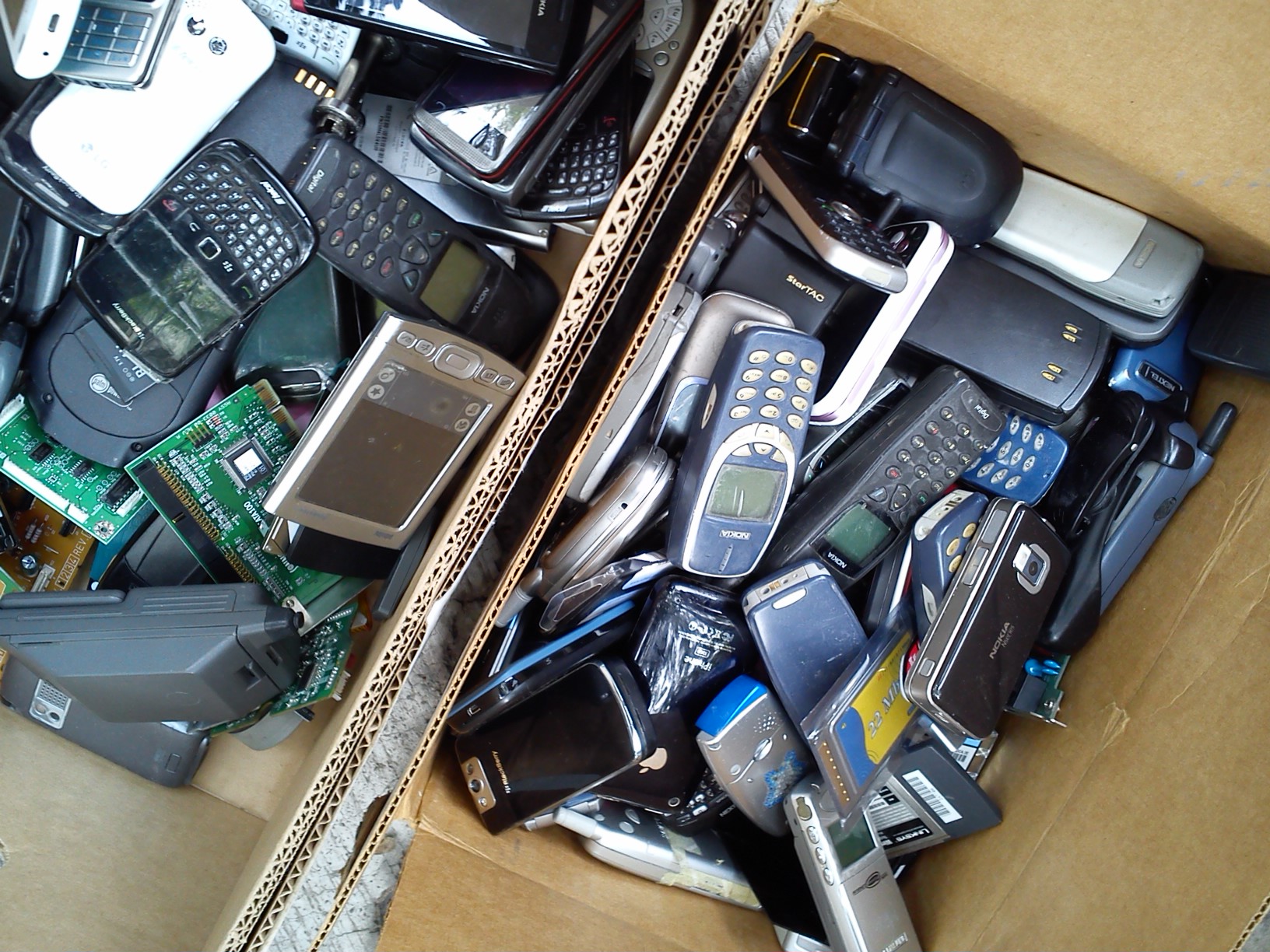
Today, we were having a recycling call at the school of my sons. I am parent representative of the class of my oldest boy, and his generation was in charge of assisting the parent association (PA) with their work. The PA does those calls to generate funds for their activities – they sell the material to a recycling company. We have had two events where we asked families to bring paper and aluminum cans. This time, we collected electronic trash – computers, cell phone, TVs, stereos, all the things that do not work or that people do not need anymore. And I was first impressed and then shocked by the amount we received.

Impressed because I saw quite some mums and dads that had taken the time and effort to check out their basements and attics to get all their tech junk together and bring it to school from 7am in the morning.

Shocked because I opened several plastic bags that had four, five cell phones in them; or three digital cameras in one lot. One dad brought four laptops that caught the eye of several of the security guys helping us because they looked still quite neat. We piled up hundreds of chargers, cables, modems; dozens of DVD players. I was just wondering how people can have so much stuff; how they can buy so many things. Mexico is still a developing country, but the families of the so-called middle class for sure spend lots of money on consumer electronics.

I was thinking about Gro Harlem Brundtland and the definition of sustainability that she and other environmental thinkers formulated more than 25 years ago: Sustainable development is the kind of development that meets the needs of the present without compromising the ability of future generations to meet their own needs. The “needs” mentioned in the Brundtland report, aka “Our Common Future”, referred to the “essential needs of the world’s poorest people”. At least 50 percent of the goods we collected this morning, I would say, were not fulfilling that criteria.

I don’t want to propagate quasi stone age life – that we all just have a roof over our heads, enough to eat, clothes to cover our bodies, and health care and education. I have a smart phone, I use a computer, I like to watch TV. I know that there is technological progress – we saw things there this morning that gave us the sense that we were using a time machine: huge computer monitors, bulky CPUs, fax machines, a TV more than half a meter deep, VHS players.

But does it always have to be the latest iPhone? My youngest son knows when the newest version of Steve Jobs’ favorite telecom device is launched. He would love to have one. A lighter laptop? A smaller dock-in station? An even bigger flat-screen? A more powerful car? We all have to ask ourselves if we are not compromising the ability of our children and grand-children to meet their own needs by consuming the way we do.

Recycling is good – a lot of the bits and pieces of the goods that we collected this morning will find their way into new cool gadgets. Production nowadays is much more resource efficient than it was in 1987 when Brundtland was asked by the then UN Secretary-General to lay the intellectual groundwork for the Earth Summit in Rio de Janeiro five years later. But nearly all experts agree that there will be no sustainability without us really rethinking and changing our consumption habits. It is a truth the business community usually does not like to hear, but some companies have shown that it also can be an opportunity.

DSC_0137

DSC_0138

Life is what happens to you while you’re busy making other plans

So, my PLAN was to write this blog. To write about “a range of subjects”, such as gender, equality, parenthood, living abroad, society, culture, politics and economics. That is what I put down in my first post on 4 October 2013. After that, only two more followed. Post number three starts with “It has been six weeks since I wrote and published the last blog on thedailyimperfections.com.” Accordingly, this one could start with “It has been nearly four months”. But I am not doing that, as otherwise you might expect the next post not before 2015.

A friend of mine told me last summer that when you move countries as a trailing spouse and parent, the first year is usually consumed with settling in. I thought she was exaggerating. I had moved continents twice over the last twelve years by then, on top an inner-European move, and then last summer crossing the Atlantic again to go back to Mexico. The settling in during our first time in Mexico in 2002 had to be turbo-charged, as I was 30 weeks pregnant when I arrived. We had to do so many things in little over two months to be ready for when the baby was born. When we moved to The Netherlands in 2004, it was a bit like in the movie “Groundhog Day” – I was expecting my second child, just that this time round I had another six months to go until the due date. Both moves and adaptations were intense.

When we changed from The Hague to Vienna in 2009, I thought that things would be so much easier. Being German, I considered settling in in Vienna a home match. But little did I know, that Austria and Germany are actually quite different in some aspects. Looking back on our first year there, I was on constant information collecting mode: school, kindergarten, babysitters, apartment, dealing with bureaucracy (registering a car bought in another EU country; dealing with the Finanzamt; etc.), football teams, swimming lessons, music class, doctors, winter tires, skiing vacation (for a Northern German and a Mexican definitely a new experience), the list goes on and on. I managed all that really well, but when the first school year ended in June 2010, I felt drained – and I had “only” been a “homemaker” and a mum. It took me two years to find a fixed employment in my profession.

This time with our fourth move, I find the adaptation process much easier. I am hugely profiting from the fact that I had lived in Mexico City before.  And that my husband is a “native”. For a European who has not spent time in the developing world or an emerging country, coming to this place is a challenge: the sheer size of the city, the distances, the traffic, the noise, the density of concrete buildings and asphalt streets, the amount of people, the lack of green spaces, the poverty and the stark differences between rich and poor take time, emotions and energy to get used to. Some people never get accustomed to it, and remain feeling foreign and alienated forever. And even though a lot of things are not new to me here, eight months after we arrived I am realizing that what my friend said last summer was actually not exaggerated. All of us – my husband, my two boys, and me – are still to a certain extent settling in.

So, in September of last year I made the PLAN to do this blog. And then life happened. But in line with the motto of this blog, I am keeping on trying. I am failing (when it takes me four months between posts), and I am believing that I will improve my output (next post in days or weeks rather than months; write about something else than moving and settling in). This blog is a proof of my daily imperfections. But it is also the source of satisfaction and joy when I finally come around and create something.

A personal note

It has been six weeks since I wrote and published the last blog on thedailyimperfections.com. What happened? Life happened. I got the keys to our new apartment and a couple of days later two trucks pulled up outside the building with nearly all our belongings, i.e. 38 cubic meters.

By that time we had stayed for twelve weeks with my husband’s mother, i.e. my mum-in-law. We had basically lived out of five suitcases – one for each of our clothes, and one for shoes. That was what we had taken with us on the plane when we moved from Vienna to Mexico City at the end of July. And actually, during those twelve weeks, we had hardly been missing those 38 cubic meters. It is both impressive and embarrassing how much stuff one has.

Impressive, because after twelve weeks, I had forgotten about a lot of things that had surrounded me before. All these books – a lot read, a lot bought with the intention to one day read them; all those clothes and shoes that did not make it as “essential” into our five suitcases and that could dress another two or three families of four easily; all those souvenirs, photographs and handicrafts made by my two boys that document life and growth. The fact that one is struck with a certain element of surprise getting a lot of those things out of the movers’ boxes is partly owed to life just being intense. One usually does not have time to “miss” one’s old life when one is busy trying to establish the most practical elements of one’s new – such as getting one’s kids accepted in a new school, finding an apartment, asking around about car insurance, or making an appointment with the internet service provider.

Embarrassing, because, seriously, one has so many things one does not need – the salad spinner I bought just half a year ago, but after 25 years without a salad spinner, I cannot get used to using one; the old video camera that was overtaken by technological advancement at least twice by now, but is still the format my wedding video was shot on; the Nordic walking poles I never quite had the patience to really learn how to use them.

After four moves with a family during the last twelve years, I have learned that it is usually best if you clear out your things before the movers come. But I have also experienced that usually your time at the place you are going to leave soon is too valuable to spend it with “properly” clearing out your things. So, that task at least has to be continued when unpacking at the new place. That is why I spent the last six weeks opening boxes and putting books, clothes and dinner plates into their new spaces; arranging photographs, mothers’ day postcards and fathers’ day paintings; and throwing out some odd souvenirs that we bought some where, but that never really meant anything to me. Proof for my daily imperfections – the salad spinner is still in a box and the Nordic walking poles are stored, as I could not bring myself to just tossing them or giving them to charity.

What I also did during the last six weeks was sticking the little Jip and Janneke-magnets to our new fridge and putting the Julius Meinl-coffee jar in our kitchen – as the former is a fond memory of our time in The Netherlands, and the later of our years in Austria. Those little things make me feel at home, and looking at them again after a long while, they manage to put a smile on my face. With this achieved, I hope that “life” in the upcoming weeks and months will offer more time for contributions to thedailyimperfections.com.

The big challenge

I grew up hardly thinking about feminism and gender equality. That debate took place before my time, it seemed.

During high school, girls could take the same courses as boys, and they got at least the same grades, often better. Then, as an apprentice and later at university, it was the same – loads of women attending the lectures on micro- and macroeconomics, a lot of them on top of their classes. They all got good jobs – it was the mid-1990s when we finished, the economy was doing fine all over Western Europe.

When I got my first well-paid position, the story continued – there were about as many women as men among the new recruits at Roland Berger, and also later at Financial Times Deutschland, there was pretty much a gender balance among editors and staff writers. Once you went up the hierarchy, women were scarcer, though.

So, all these years, I experienced that men and women have the same rights and that they can achieve the same if they want to.

This believe drastically changed when I got kids.

It might be a “German reality” much more than it is a Belgian, US-American or Argentine one. That is because until a few years ago (and still nowadays in a lot of cities in Western Germany), finding a day-care for your one-year-old is not easy. Finding one, that is open until 6 or 6:30 in the evening is close to impossible. And how about a creche for a six-month-old baby – forget about it. Germans are still doing quite well financially that the pressure for both parents to go back to work full time right after birth is less heavy than in Chicago or New York. And as Europeans usually run their own households, both husband and wife working AND doing the cleaning, washing, shopping and cooking is very often more than a lot of couples and new-born parents can deal with. In the developing world such as Latin America, professionals have the luxury of much more support at home – a “muchacha” who prepares your dinner, some guy who washes your car, a person with a power-drill and a bag of tools who fixes your broken sink for a few dollars, instead of you spending precious time on DIY during the weekend.

The special German character of this situation gets even more pronounced once children start school – as up until today, a lot of German primaries and even secondary schools finish at mid-day. And classes are usually designed so that students do a substantial part of the understanding and learning outside the classroom. In such a set-up, it comes in very handy for the student to have the support of a well-educated person in the afternoon – either in some after-school institution (those are, again, not always easy to find) or at home. In the latter case, another task for mom or dad.

When I consider all the men and women whom I studied and worked with in the past and who got children some time along the way, most of the men work full-time, while most of the women are employed part-time. The “moms” are occupied more than part-time, though – as in most cases they have assumed the main responsibilities of raising the kids and running the home.

So, on paper, men and women, fathers and mothers have the same rights and are considered equal. Reality shows, however, that even with the same education and similar capabilities, moms and dads very often take on different roles and subsequently have different careers and reach different earning potentials. One of the main challenges of nowadays families is for parents to find the roles that suit them and for couples to negotiate along mom’s and dad’s expectations, desires and necessities. After more than 30 years without them, I am finally leading my very own debates on feminism and gender equality.